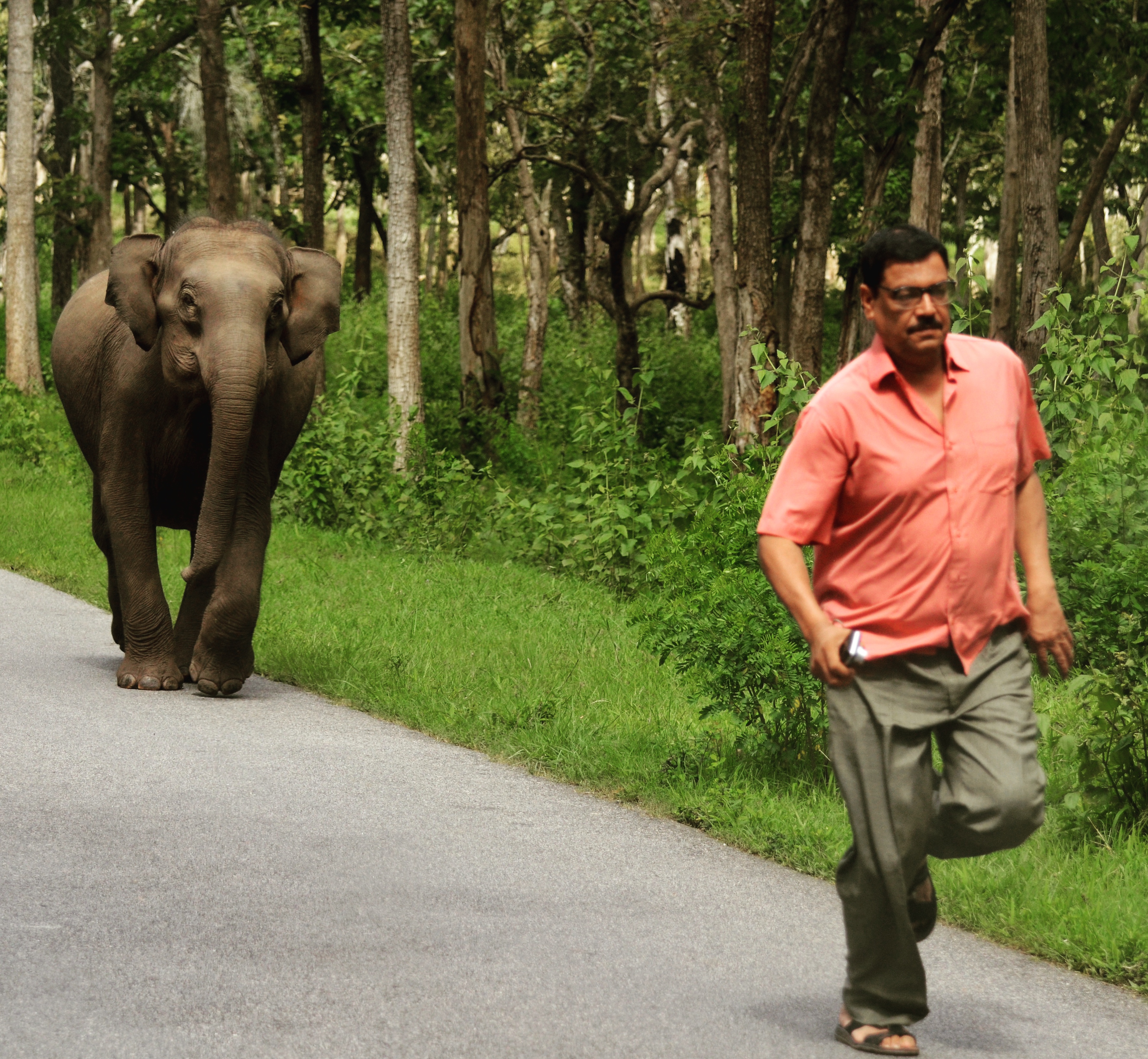
Farmer killed after elephant emerges from the Hediyala forest range
A 62-year-old farmer was killed and another injured near Kadagere after a wild elephant entered an agricultural field near the Bandipur landscape.
We study the landscapes where people and wildlife meet — and work toward a future where forests are not only protected, but rebuilt.
We spend time where forest meets farmland. We walk wildlife routes, speak with communities and document movement, timing, encounters and warning signs.
Human–wildlife conflict is rarely only an animal problem. It is a landscape problem — and understanding that landscape is where better solutions begin.
People and wildlife share the same edges. These reports keep both sides of that reality visible.
A 62-year-old farmer was killed and another injured near Kadagere after a wild elephant entered an agricultural field near the Bandipur landscape.
Forest teams continued searches using camera traps, thermal drones and other teams after a farmer was killed on 14 September.
An injured leopard reportedly hit by a vehicle attacked a forest department watcher during a rescue operation.
A long-form report examines recurring wildlife encounters along the forest–farmland interface around Saragur.
The National Tiger Conservation Authority's 2026 mortality register records a tiger mortality at Maragada Kere, Haradanahalli Village, along NH-948, inside Bandipur Tiger Reserve.
The NTCA 2026 mortality register records a tiger mortality in the Muthodi territorial Range of Chikkamagaluru Division, within the Bhadra Tiger Reserve landscape.
A reported wildlife-mortality incident in Kodagu came amid continuing human–elephant conflict in the district. The reported cause was not established in the cited report.
Green Minute reported that a wild tusker was found dead after being electrocuted by an electric fence around a plantation near Talavara.
Elephant Marthanda died after sustaining severe injuries during a clash with another trained elephant at Dubare Elephant Camp, according to officials quoted by PTI.
Bandipur and its surrounding landscape are a mosaic of protected forests, villages and agricultural land. The map shows the landscape in which WildCradles intends to work.
Find land where restoration could strengthen or reconnect habitat.
Mobilise donations, partnerships and conservation funding to secure suitable land.
Support native regeneration and ecological restoration.
Strengthen links between fragmented forest patches.
Keep restored habitat protected for the long term.
Defend the landscapes that still hold wildlife.
Bring strategically important land back toward forest.
Give wildlife larger, safer landscapes to move through.
Give people the information and time to coexist.
+1 Tiger is WildCradles' north-star ambition for rebuilding habitat at landscape scale — not a promise that restoration automatically produces a tiger. The ecological outcome depends on habitat, prey, connectivity, protection and many other conditions.
Elephants do not recognise our boundaries. Their paths cross farms, roads and settlements because the landscape they move through existed long before those boundaries did.
A tiger can pass through a landscape without most people ever knowing. For someone living beside its habitat, knowing that it is there can change everything.
Leopards can move through landscapes shaped by both people and wildlife. Their ability to remain close to human habitation makes awareness, reporting and coexistence increasingly important.
Some conflicts happen with almost no warning. Understanding where people and wildlife overlap can help communities prepare before an encounter happens.
A physical boundary cannot always keep people and wildlife apart. Sometimes the most important protection is information arriving before the animal does.
A sighting is more than a photograph. It can tell us where wildlife is moving, when it is active and where people and animals repeatedly meet.
Vanya is being developed to turn individual observations into a shared picture of the landscape.


WildCradles intends to facilitate field-based research opportunities for students, researchers, institutions and conservation practitioners.
We believe conservation becomes stronger when observation, local knowledge and scientific research meet on the ground.
Research activities are subject to relevant permissions, Forest Department requirements, community considerations and field-safety protocols.
Field work, research, technology, mapping, media and community programmes.
Volunteer with WildCradles →Support land acquisition, habitat restoration, community safety, research and conservation technology.
Support WildCradles →We can rebuild it — one parcel, one restored habitat, one connected landscape at a time.
Research. Field partnerships. Volunteering. Support for the landscapes we want to restore.
wildcradles@gmail.com
+91 73378 49102 · +91 86602 01246
wildcradles.org
We are building toward a model where conservation funding can help secure strategically important land, restore habitat and reconnect forests.
